CHANGING THE WAY WOMEN AGE.

Why Feeling Good Is About More Than Weight

Step on the scale. Take a deep breath.
Hope the number went down.
For many women, this routine has become second nature.
The scale often feels like the ultimate measure of success.
If the number drops, it's a good day.
If it doesn't, it can feel discouraging, even if you've been making healthier choices.
But here's something worth remembering:
Your health is made up of far more than a single number.
The scale can tell you how much you weigh.
It can't tell you how strong you feel.
How well you're sleeping.
How easily you climb the stairs.
How confident you feel in your body.
Or how consistently you've been taking care of yourself.
Health Isn't Measured By One Number
Weight is only one measurement.
It doesn't tell the whole story.
Two people can weigh exactly the same but have very different lifestyles, fitness levels, and overall health.
Likewise, your weight may stay the same while other important changes are happening.
You may be building healthier habits.
Improving your mobility.
Supporting lean muscle.
Feeling stronger during everyday activities.
Those changes matter, even if they aren't immediately reflected on the scale.
Progress Often Show Up In Unexpected Ways
Sometimes the biggest signs of progress aren't measured in pounds.
Maybe you're walking farther without getting tired.
Maybe carrying groceries feels easier.
Maybe you're sleeping more consistently.
Maybe your clothes fit differently.
Or perhaps you've simply developed routines that make healthy choices feel less like work.
These are meaningful improvements because they reflect how your body is functioning, not just what it weighs.
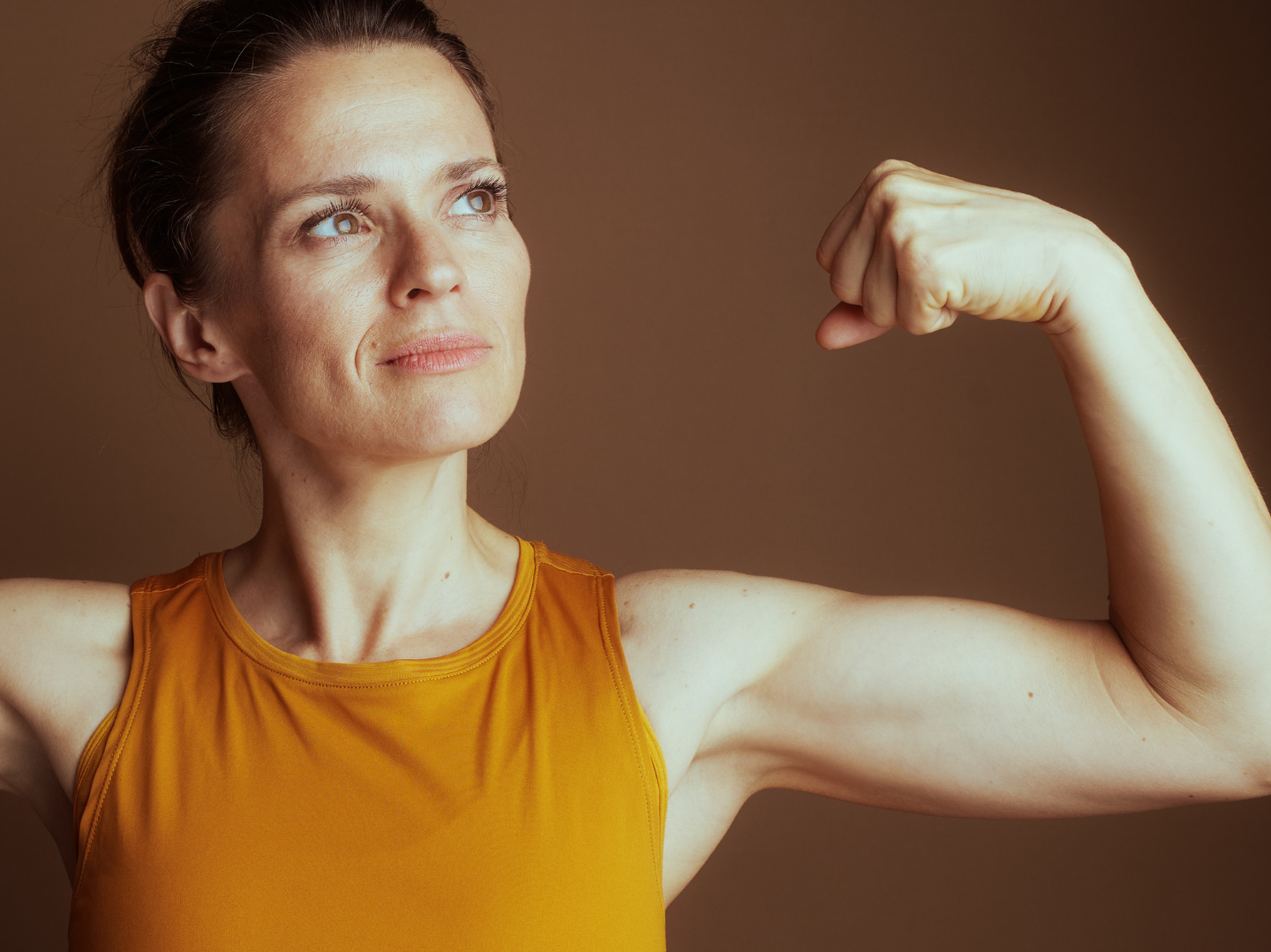
Why Muscle Deserves More Attention
As we age, maintaining lean muscle becomes increasingly important.
Muscle supports strength, balance, mobility, and independence.
It's also one of the body's most metabolically active tissues, making it an important part of healthy aging.
That's why many health professionals encourage adults, especially after 40, to think beyond weight loss alone.
Preserving muscle while supporting overall health helps create a stronger foundation for the years ahead.
Instead of asking, "How can I weigh less?"
A better question may be, "How can I support my body so it stays strong?"
Healthy Habits Create Lasting Results
Quick fixes often focus on dramatic short-term changes.
Healthy aging is different.
It's built through habits that are realistic enough to continue month after month.
Balanced meals.
Regular movement.
Strength-building activities.
Consistent sleep.
Managing stress.
None of these habits are exciting on their own.
But together, they create a lifestyle that supports long-term health.
That's a goal worth celebrating, regardless of what the scale says.
Where AgelessLX Fits Into Your Journey
Healthy aging isn't about choosing between strength and weight management.
Both matter.
They simply support different aspects of your overall health.
AgelessLX Strawberry Lemonade is powered by myHMB (Calcium beta-hydroxy beta-methylbutyrate), a research-backed ingredient that supports lean muscle, helping you maintain strength and mobility as you age.
For women who are also focused on supporting metabolic health as part of a healthy lifestyle, MetabAlert complements balanced nutrition and regular movement by helping maintain healthy blood sugar levels already within the normal range.*
Together, they support a lifestyle centered on strength, movement, and long-term wellness, not simply chasing a lower number on the scale.
Redefining Success
Imagine measuring success a little differently.
Celebrating the days you went for a walk.
Prepared a balanced meal.
Kept your healthy routine.
Felt stronger than you did last month.
Those are victories, too.
In fact, they're often the habits that create the biggest changes over time.
The scale may still have a place.
But it doesn't get to tell your whole story.
The Takeaway
Your weight is one piece of information.
It isn't your report card.
Real progress is reflected in how your body feels, moves, and supports you through everyday life.
When you focus on building strength, supporting your metabolism, and creating sustainable habits, you're investing in something much bigger than weight loss.
You're investing in your future health.
And that's a number no scale can measure.

References:
-
Cruz-Jentoft AJ, et al. Sarcopenia: Revised European Consensus on Definition and Diagnosis.
Age and Ageing. 2019.
https://pubmed.ncbi.nlm.nih.gov/30312372/
-
National Institute on Aging.
Exercise and Physical Activity.
https://www.nia.nih.gov/health/exercise-and-physical-activity
-
Wilkinson DJ, Hossain T, Hill DS, et al.
Effects of Leucine and Its Metabolite β-Hydroxy-β-Methylbutyrate (HMB) on Human Skeletal Muscle Protein Metabolism.
IMPORTANT NOTE
This article is provided for general educational purposes only and is not intended to replace individualized medical advice. The information shared is designed to support informed conversations about healthy aging, nutrition, movement, and lifestyle. Always consult your healthcare professional before making significant changes to your diet, exercise routine, or supplement use, especially if you are pregnant, nursing, taking medication, or managing a health condition.

Learn More
Info
Contact us
📍321 W. Broadway, Suite 500,
Missoula MT 59802
Learn More
Info
Contact us
📍321 W. Broadway, Suite 500,
Missoula MT 59802
*These statements have not been evaluated by the Food and Drug Administration. These products are not intended to diagnose, treat, cure, or prevent any disease.
**Individuals may have received free product or compensation in exchange for their honest review. Individual results will vary. All other benefits/effects noted in these testimonials/reviews are the individuals’ personal opinions and have not been studied.
© 2026 AgelessLX ®️. All rights reserved.