CHANGING THE WAY WOMEN AGE.

Train Smarter, Not Just Harder
How Exercise Priorities Change As We Age
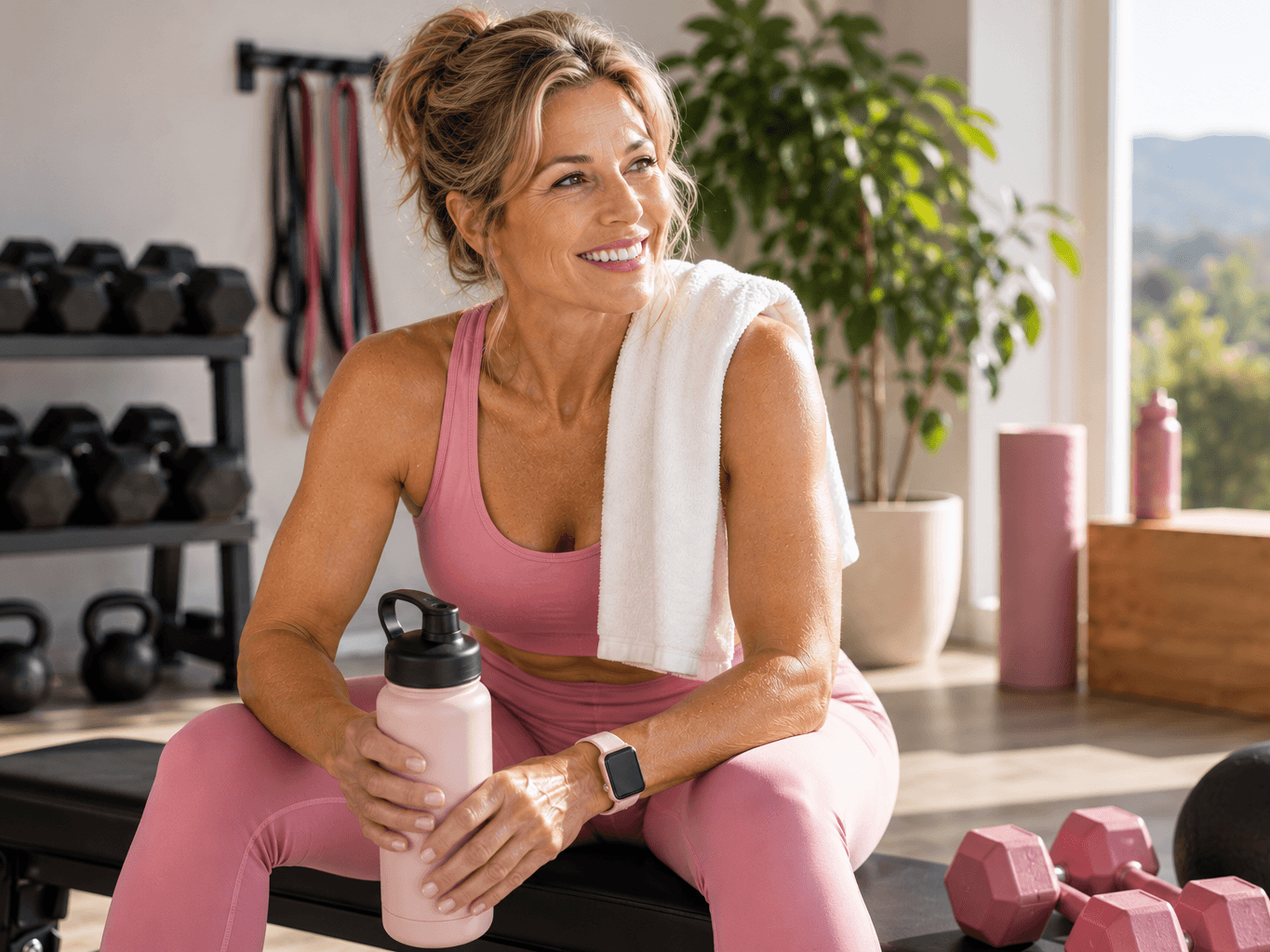
For years, fitness advice seemed to follow one simple rule:
Want better results?
Do more.
More workouts.
More cardio.
More intensity.
More calories burned.
But eventually, another question becomes more useful:
What are you actually training for?
Because as we age, exercise can become about far more than how much work we can squeeze into a week.
Strength.
Muscle.
Balance.
Mobility.
Physical capability.
Those goals deserve a place beside calories burned.
Exercise Is The Signal
Exercise challenges the body.
The body then responds to that challenge.
Resistance training, for example, gives muscle a reason to adapt.
That means the workout itself is only one part of the process.
The quality of the stimulus matters.
So does your ability to recover and repeat it consistently.
More exercise is not automatically more useful exercise.
Strength Deserves A Bigger Role
Cardiovascular exercise remains important.
Walking matters.
Heart health matters.
Staying active matters.
But resistance training has another valuable role.
It asks the body to maintain and build strength.
That becomes increasingly meaningful over time because muscle contributes to everyday physical capability.
Instead of judging every workout only by:
“How many calories did I burn?”
Try adding another question:
“What did I ask my body to become better at today?”
Maybe the answer is lifting something heavier.
Improving balance.
Moving with more confidence.
Or simply maintaining the strength that makes everyday life easier.
Soreness Isn't A Score
A workout does not need to leave you exhausted to be effective.
And being extremely sore is not proof that you trained correctly.
Soreness can occur after unfamiliar or demanding exercise, but it is not a reliable measure of progress.
The goal is not to create the largest possible amount of discomfort.
It is to provide an appropriate challenge repeatedly enough for your body to adapt.
That is a very different mindset from:
“If some is good, more must be better.”
Recovery Belongs In The Strategy
Training and recovery are not opposites.
They are parts of the same process.
Nutrition, adequate protein, sleep, hydration, and lower-intensity days all contribute to the broader environment in which your body responds to exercise.
This does not mean avoiding challenge.
It means recognizing that exhaustion is not the only way to measure effort.
Sometimes smarter training means knowing when another hard workout is useful and when it is simply more.
Train For The Body You Want To Keep Using
One of the most meaningful shifts in exercise priorities happens when the goal becomes bigger than appearance.
Strength allows you to:
carry groceries,
climb stairs,
travel,
garden,
pick things up from the floor,
and keep participating in the activities that make life enjoyable.
That changes the purpose of exercise.
Instead of training only to make your body smaller, you can also train to keep it capable.
That is a powerful reason to stay active.
Where AgelessLX Strawberry Lemonade Fits In
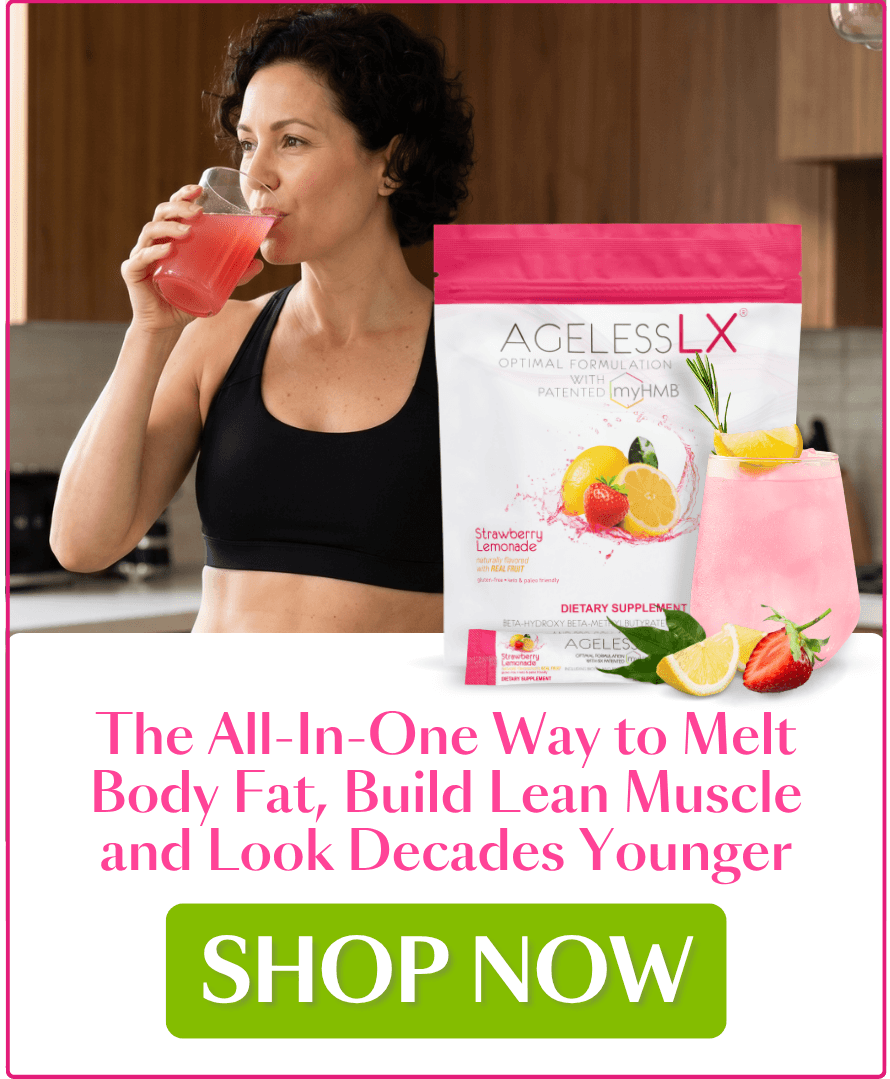
AgelessLX Strawberry Lemonade contains myHMB®, a branded form of HMB selected for its research history related to muscle health.
That gives the product a clear and natural role in this article.
The article teaches:
Train with muscle in mind.
AgelessLX complements:
The muscle-support side of that routine.
myHMB® does not replace resistance exercise.
AgelessLX Strawberry Lemonade is also not a protein powder.
It complements the foundations that matter, including resistance training, adequate nutrition, protein, movement, and recovery.
The Takeaway
Exercise does not become less important as we age.
It becomes worth thinking about differently.
Less obsession with how much you can burn.
More attention to what you are building and preserving.
Less pressure to prove every workout was hard enough.
More focus on whether your routine can support strength consistently over time.
Because the smartest workout is not always the hardest one.
It is the one that supports the body you want to keep using.
References:
-
Hunter, Gary R., John P. McCarthy, and Marcas M. Bamman. “Effects of Resistance Training on Older Adults.”
Sports Medicine, vol. 34, no. 5, 2004, pp. 329-348.
https://pubmed.ncbi.nlm.nih.gov/15107011/.
-
Morton, Robert W., et al. “A Systematic Review, Meta-Analysis and Meta-Regression of the Effect of Protein Supplementation on Resistance Training-Induced Gains in Muscle Mass and Strength in Healthy Adults.”
British Journal of Sports Medicine, vol. 52, no. 6, 2018, pp. 376-384.
-
Churchward-Venne, Tyler A., et al. “Evaluation of Sex-Based Differences in Resistance Exercise Training-Induced Changes in Muscle Mass, Strength, and Physical Performance in Healthy Older Adults: A Systematic Review and Meta-Analysis.”
Ageing Research Reviews, 2023.
IMPORTANT NOTE
This article is provided for general educational purposes only and is not intended to replace individualized medical advice. The information shared is designed to support informed conversations about healthy aging, nutrition, movement, and lifestyle. Always consult your healthcare professional before making significant changes to your diet, exercise routine, or supplement use, especially if you are pregnant, nursing, taking medication, or managing a health condition.

Learn More
Info
Contact us
📍321 W. Broadway, Suite 500,
Missoula MT 59802
Learn More
Info
Contact us
📍321 W. Broadway, Suite 500,
Missoula MT 59802
*These statements have not been evaluated by the Food and Drug Administration. These products are not intended to diagnose, treat, cure, or prevent any disease.
**Individuals may have received free product or compensation in exchange for their honest review. Individual results will vary. All other benefits/effects noted in these testimonials/reviews are the individuals’ personal opinions and have not been studied.
© 2026 AgelessLX ®️. All rights reserved.